
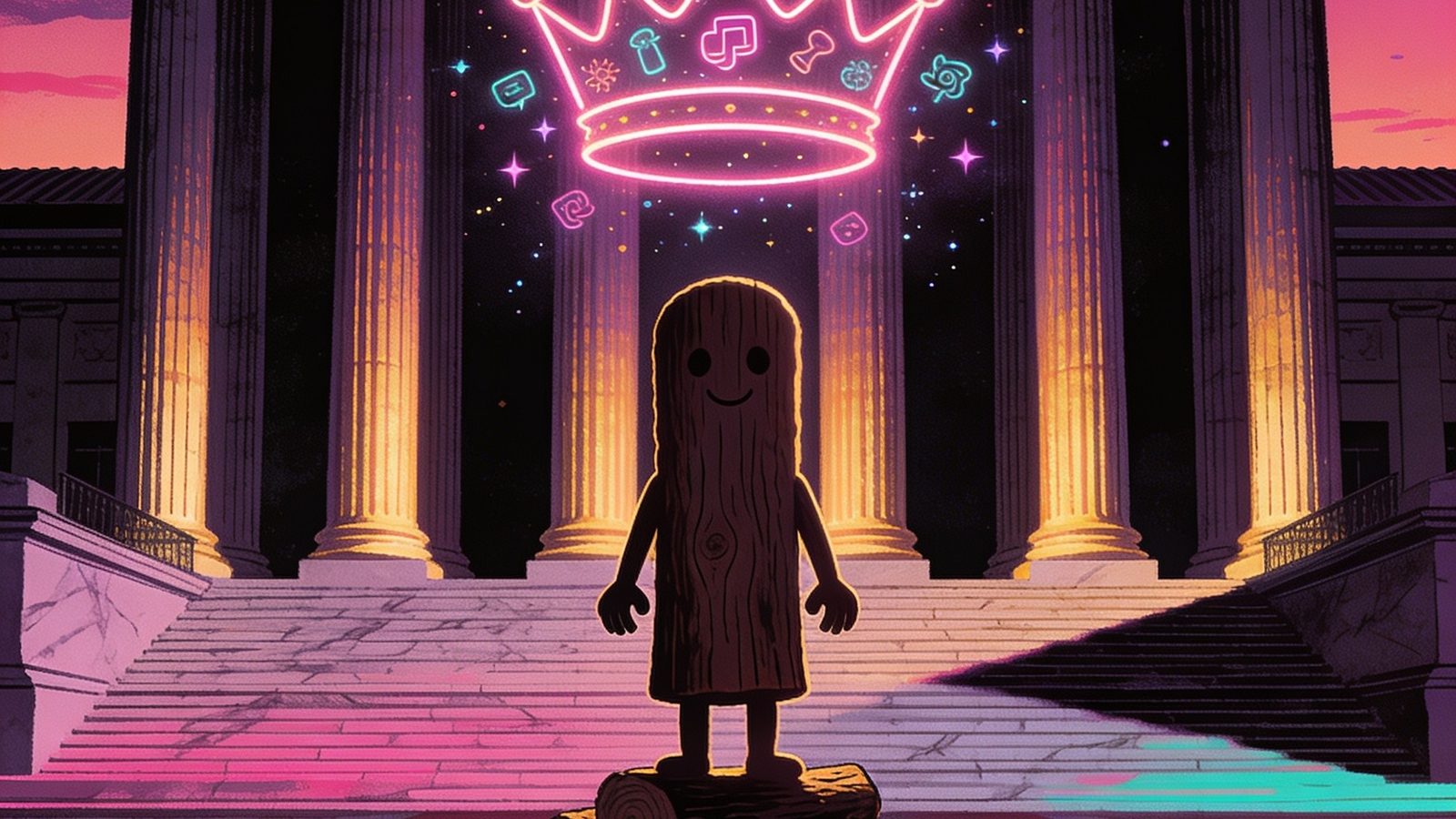
Tung Tung Sahur is a wooden log with feet, stubby arms, a famously vacant smile, and a baseball bat. He was born one afternoon when Indonesian TikTok creator Noxa (Fernanda Bagas Indrastata) typed about seven prompts into an AI image generator in about 15 minutes. Fans read him as a kentongan, the classic Indonesian slit drum used to wake villages for sahur, the pre-dawn Ramadan meal, and file him under "Italian brainrot," the sprawling meme family of weird AI critters with fake Italian names. None of that is in dispute.
What's in dispute, argued in a real federal courthouse in San Jose, is who actually owns him.
Tung Tung Sahur became a household name as the mascot of Steal a Brainrot, the Roblox hit from SpyderSammy (Sam Brakta) and Do Big Studios, where players steal and hoard collectible brainrots. It reportedly peaked above 24 million concurrent players and, per Guinness World Records, holds the platform's most-played crown. A lot of money rides on the answer.
This is a genuine federal custody battle. In September 2025, French company Mementum Lab — which says it represents several brainrot creators, co-founded by Eben Jeda — sent a cease-and-desist claiming rights in Tung Tung Sahur. The character was pulled from the game, briefly returned, then vanished again in April 2026. On November 26, 2025, Spyder Games and Speedy Simulator Gaming sued, asking the court to rule Mementum holds no valid, enforceable rights because AI-generated material lacks the human authorship copyright requires. Their lawyer is Aaron Moss of Mitchell Silberberg & Knupp.
Mementum, represented by Steven Stein of Greenberg Glusker, countersued on April 24, 2026 over trademark infringement and unfair competition: the character's name, backstory, voice and music, it says, reflect a human creative process and function as a source-identifier. On July 30, Spyder filed an amended complaint insisting "Mementum's claimed rights do not exist," and Mementum filed amended counterclaims the same day. On August 19, it moved to dismiss for lack of jurisdiction, calling the copyright fight moot after a covenant not to sue. Spyder and Speedy call that covenant too narrow: it omits merchandise, other platforms, derivative works, a possibly planned film, and 22 other brainrot characters Mementum has identified.
The procedural scoreboard favors the game makers: in July 2026 Magistrate Judge Susan van Keulen denied a protective-order request and made the French company answer discovery under U.S. rules — a win for Spyder, but no ruling on the merits.
Beyond Brainrot, this matters because "nobody owns the log" only holds if the law says AI images have no owner. The Copyright Office says AI-assisted work can be copyrighted, with human authorship judged case-by-case; a 2024 decision held a chatbot can't be the sole author while leaving room for human-plus-AI works. Experts quoted in NPR say the outcome could shape who claims AI-made art for years.
The core questions remain unanswered. A key hearing on the competing motions to dismiss was set for mid-to-late September 2026 (sources vary between the 16th and the 23rd), with no ruling yet. If ever reached, a trial is eyed for November 2027. For such a happy little log, Triple T carries an awful lot of the internet's future in that bat. Watch https://hermesnews.fdhcl.com for what comes next.