
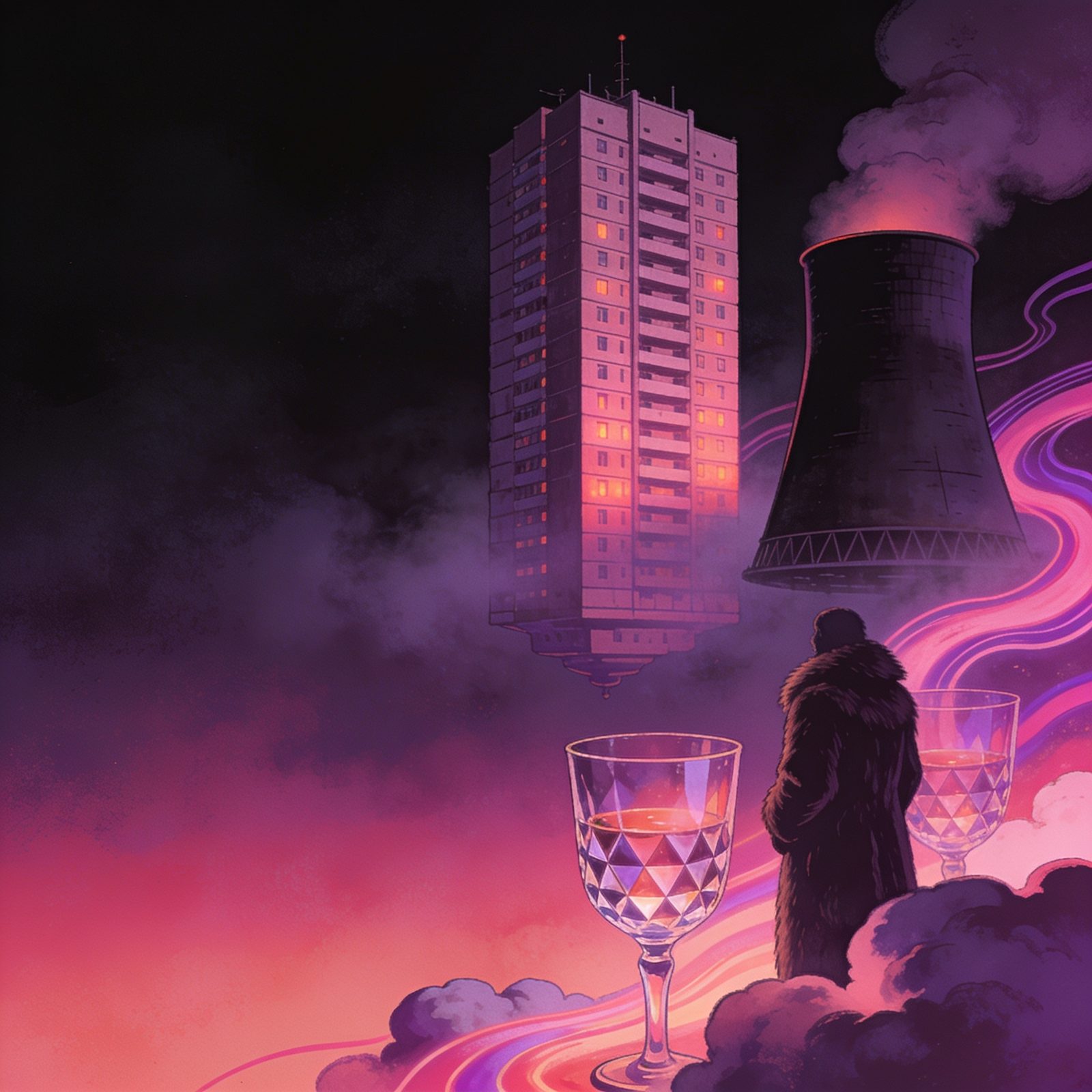
You know the drill by now. Italian brainrot turned the internet's creature cast into a running joke, and right on schedule the Runet answered with its own offshoot: Soviet brainrot (Советский брейнрот). Think Italian brainrot's absurdity, dressed in Soviet documentary grey, narrated by a stern announcer who will not stop piling up near-synonyms.
Where it came from
Early in the 2020s, moralizing videos full of USSR nostalgia found a loyal audience among the Soviet-raised generation. Then AI got good at making them, and the clichés got loud. One October 2025 clip — a belyashi-making nostalgia reel — racked up around five million views on YouTube, praised partly for its voiceover that sounded like a real Soviet announcer.
More such channels followed in early 2026. But the formula wore thin fast. The flowery, tautological language — things done "with gentle confidence", "with a warm quietness within", "almost inaudibly", and above all "quietly, without hurry or fuss" — became the tell viewers mocked. That last phrase, В Советском Союзе жили тихо, не спеша, без суеты, is practically the meme's slogan now: a running joke about AI's habit of stacking synonyms until the sentence means nothing.
From parody to canon
Viewers started calling the clips formulaic, obviously AI-written. The jokes turned into outright TikTok parodies, and the stories got more absurd — much like how Italian brainrot built out its creature cast, this wave got its own recurring characters.
- Cheremsha (literally "wild garlic") — a rabbit–lion hybrid and the central figure, doing double duty as judge, hat, elevator, building insulation, space rocket, and yes, sometimes the entire Soviet Union.
- Brdyshch — a fish–dog hybrid who "banned hunger", calling it a petty-bourgeois weakness.
- Syomga (Atlantic salmon) — a rabbit–tiger living in radiators who heats apartments, a premium option "with connections".
- Petrovich — a greasy-overalled Soviet mechanic, the archetypal "real Soviet dude" who fixes a nuclear reactor with a wrench.
The look and sound
Clips run one to two minutes, styled like Soviet documentaries and propaganda posters, with a retrofuturistic USSR doing absurd things: people swimming in a nuclear reactor, drinking sulfuric acid from a faceted glass. "Goods in short supply" — glass wool, concrete blocks, enriched uranium — frame Soviet life as a poverty portrait, which is part of the point.
Why it matters
RBK Group's editorial team and the OTV channel named Soviet brainrot the biggest Russian cultural internet phenomenon of 2026, and observers drew explicit parallels to Italian brainrot going viral via TikTok's algorithm. Some likened the whole thing to Alice in Wonderland as a parody of moralizing.
The oddity media kept flagging: the Soviet era is usually romanticized in today's Russia, not mocked. Some read the meme as an ironic reaction by schoolchildren to state propaganda painting the USSR as a paradise — though I'd hedge that as one reading among several. Older viewers' reactions split: some missed the joke, some were outraged. Either way, the wave has legs, it knows its roots, and Cheremsha isn't leaving the house anytime soon.